




| Herkunftsort: | China |
|---|---|
| Markenname: | Tonking |
| Zertifizierung: | ISO, HACCP, KOSHER, HALAL |
| Modellnummer: | TK-Usneasäure |
| Min Bestellmenge: | 100g |
| Verpackung Informationen: | 1 kg/Tasche, 25 kg/Trommel oder nach Maß |
| Lieferzeit: | 3-5 Werktage |
| Zahlungsbedingungen: | T/T, Western Union, |
| Versorgungsmaterial-Fähigkeit: | 3000 kg pro Monat |
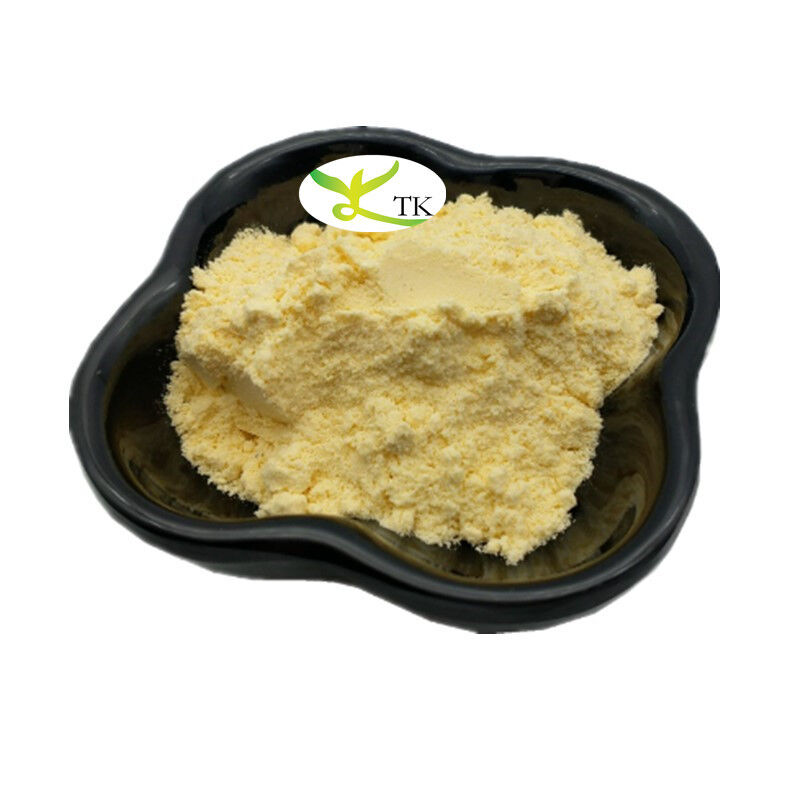
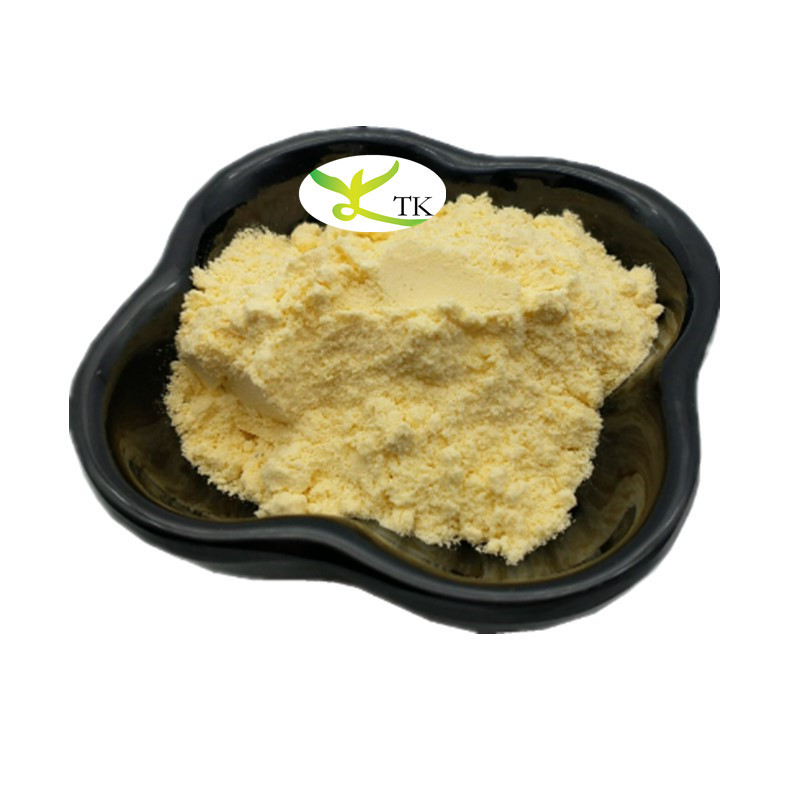
| Aussehen: | Gelbpulver | Teil gebraucht: | GANZ |
|---|---|---|---|
| Spez: | 98 % | Anwendung: | Gesundheitspflege |
| Cas-Nr.: | 125-46-2 | Haltbarkeit: | 2 Jahre |
| Hervorheben: | Lichen-Extrakt aus Usninsäure 98%,Pflanzenextraktpulver Usnea-Säure,Usninsäure CAS 125-46-2 |
||
Höchste Qualität Pflanzenextrakt Flechten-Extrakt Usnea-Säure 98% CAS 125-46-2
Was ist "Usnea Acid"?
Usnea-Säure (Usnic-Säure) ist eine starke, "zweischneidige" natürliche Verbindung.
Für Haut-, Wund- oder Mundinfektionen ist eine kommerziell hergestellte Creme, Salbe,Wirksam und sicher, wenn es gemäß den Anweisungen angewendet wird.
Lichen Extract Usnea Acid 98%" bezieht sich fast sicher auf 98% reine Usnic Acid, isoliert und raffiniert aus Flechten (oft Usnea oder andere Gattungen wie Cladonia).
|
Produktbezeichnung:
|
Usnea-Extraktpulver
|
| Gebrauchtes Teil |
Vollständig
|
|
Spezifikation/Reinheit:
|
Usnea-Säure 98% |
|
Aussehen:
|
Gelbes Pulver
|
| Zulassung | Lebensmittelqualität |
|
Haltbarkeit:
|
24 Monate
|
|
Verpackung:
|
1 kg/Tasche, 25 kg/Faserdrommel
|
|
Anwendung
|
1. Funktionale Lebensmittel
2. Krankenversicherungserstattung 3. Medizin
|
Wichtige Eigenschaften und traditionelle Verwendungszwecke
Antibakterielle Wirkung: Usninsäure stört die Bakterienzellmembranen und hemmt die mitochondriale Atmung.Wirksam gegen eine Reihe von Gram-positiven Bakterien wie Staphylococcus aureus (einschließlich einiger MRSA-Stämme) und Streptococcus pneumoniae.
Antifungaler und Prototozoaler Wirkstoff: Wird gezeigt, dass er gegen einige pathogene Pilze und Protozoen wie Candida albicans und Leishmania-Arten wirkt.
Antivirale Wirkstoffe: Einige Studien zeigen eine Wirksamkeit gegen bestimmte Viren, einschließlich Influenza und Herpes simplex virus (HSV).
Entzündungs- und Schmerzmittel: Wird topisch angewendet, um Schwellungen und Schmerzen bei Wunden, Verstauchungen und Infektionen zu reduzieren.
Traditionelle und moderne Verwendung:
Historisch wurde Usnea in verschiedenen Kulturen (Europa, Asien, Amerika) zur Wundverbandung, zur Behandlung von Atemwegsinfektionen (als Tinktur oder Tee) und bei Magen-Darm-Erkrankungen verwendet.
Heute findet man es vor allem in topischen Anwendungen (Cremes, Salben, Gelen) gegen Hautinfektionen, Akne, Fußbeschwerden und in Mundhygieneprodukten (Mundspüler, Zahnpasta).Systemische (interne) Anwendung ist viel seltener und erfordert Vorsicht.